Rare Pokemon Cards Worth Money
Last updated: February 2026
| # | Card | Set | Market Price | PSA 10 | 30-Day Trend |
|---|---|---|---|---|---|
| 1 | Gyarados Star (Delta Species) | Holon Phantoms | $2,000 | $98,888 | +0.0% |
| 2 | Charizard Star (Delta Species) | Dragon Frontiers | $599.00 | $58,723 | +0.0% |
| 3 | Mew Star (Delta Species) | Dragon Frontiers | $1,700 | $57,500 | +0.0% |
| 4 | Poncho-wearing Pikachu - 230/XY-P | XY Promos | $3,599 | $9,650 | — |
| 5 | Poncho-wearing Pikachu - 230/XY-P (Japanese) | XY-P: XY Promos | $4,000 | $11,000 | +0.0% |
| 6 | Latios Star | Deoxys | $1,141 | $51,100 | — |
| 7 | Pikachu (1) | WoTC Promo | $27.64 | $750.00 | +0.0% |
| 8 | Pikachu Star | Holon Phantoms | $3,200 | $50,000 | +0.0% |
| 9 | Lugia | Aquapolis | $2,500 | $41,500 | +0.0% |
| 10 | Charizard | Deck Exclusives | $180.64 | $3,800 | +0.0% |
| 11 | Latias Star | Deoxys | N/A | $37,500 | — |
| 12 | Gengar (H9) | Skyridge | $7,386 | $34,905 | — |
| 13 | Charizard | Legendary Collection | $500.00 | $34,100 | +0.0% |
| 14 | Charizard (Japanese) | Mysterious Mountains | N/A | $24,000 | — |
| 15 | Rayquaza Star | Deoxys | $2,501 | $9,898 | +0.0% |
| 16 | Poncho-wearing Pikachu - 207/XY-P | XY Promos | $7,211 | $27,000 | — |
| 17 | Dark Dragonite | Legendary Collection | $509.99 | $26,000 | +0.0% |
| 18 | Vaporeon Star | Power Keepers | $457.00 | $1,075 | +0.0% |
| 19 | Charizard G | Supreme Victors | $94.24 | $24,950 | +0.0% |
| 20 | Mewtwo Star | Holon Phantoms | $2,002 | $24,500 | +0.0% |
1. Gyarados Star (Delta Species) (Holon Phantoms)
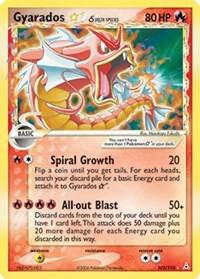
Gyarados Star (Delta Species)
Holon Phantoms · 102/110
Ultra RareMarket Price
$2,000
Low/High
$2,000 - $2,000
PSA 10
$98,888
30-Day Trend
+0.0%
2. Charizard Star (Delta Species) (Dragon Frontiers)
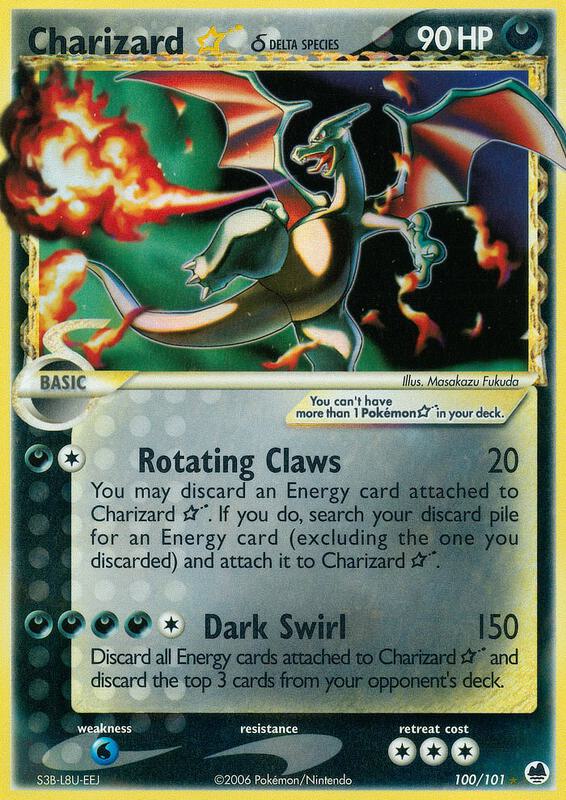
Charizard Star (Delta Species)
Dragon Frontiers · 100/101
Ultra RareMarket Price
$599.00
Low/High
$599.00 - $599.00
PSA 10
$58,723
30-Day Trend
+0.0%
3. Mew Star (Delta Species) (Dragon Frontiers)
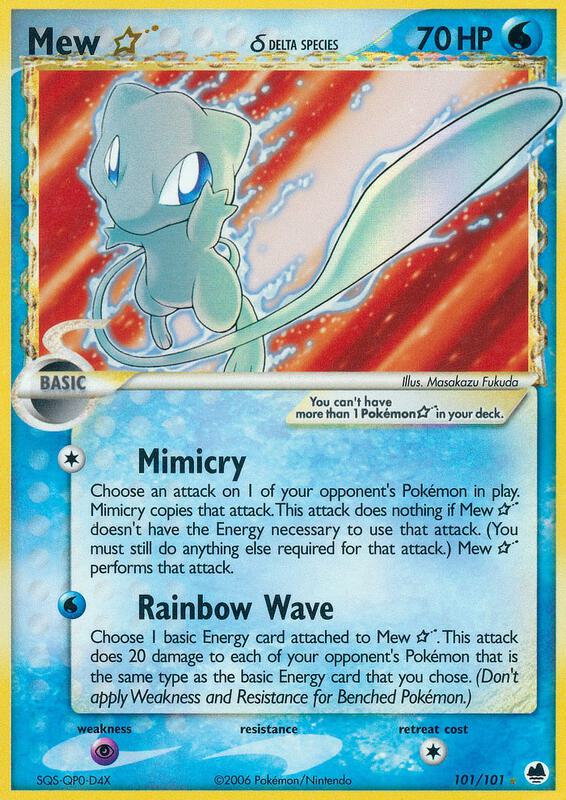
Mew Star (Delta Species)
Dragon Frontiers · 101/101
Ultra RareMarket Price
$1,700
Low/High
$1,700 - $1,700
PSA 10
$57,500
30-Day Trend
+0.0%
4. Poncho-wearing Pikachu - 230/XY-P (XY Promos)
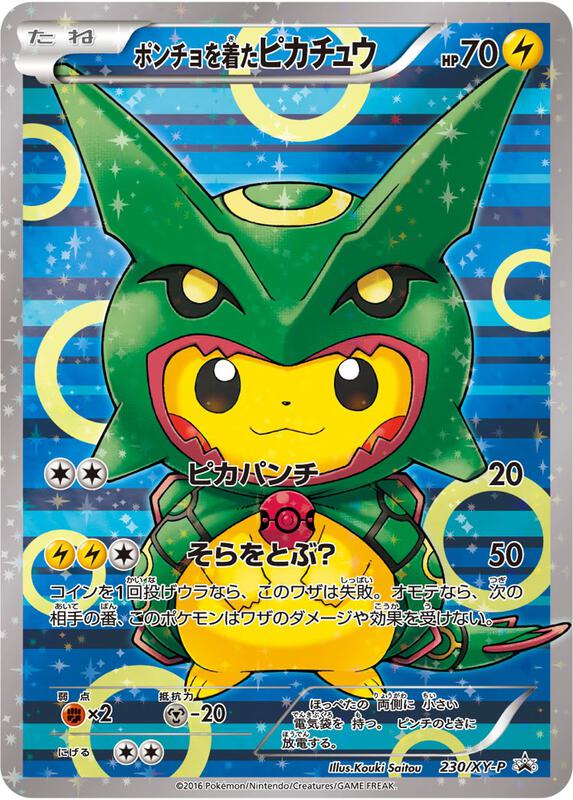
Poncho-wearing Pikachu - 230/XY-P
XY Promos · 230
PromoMarket Price
$3,599
Low/High
$3,599 - $3,599
PSA 10
$9,650
30-Day Trend
—
5. Poncho-wearing Pikachu - 230/XY-P (Japanese) (XY-P: XY Promos)
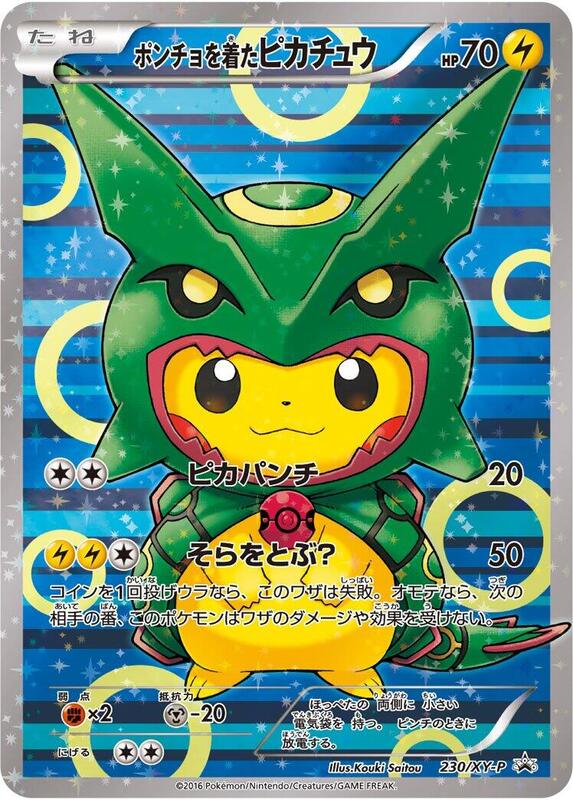
Poncho-wearing Pikachu - 230/XY-P (Japanese)
XY-P: XY Promos · 230/XY-P
CommonMarket Price
$4,000
Low/High
$4,000 - $4,000
PSA 10
$11,000
30-Day Trend
+0.0%
6. Latios Star (Deoxys)
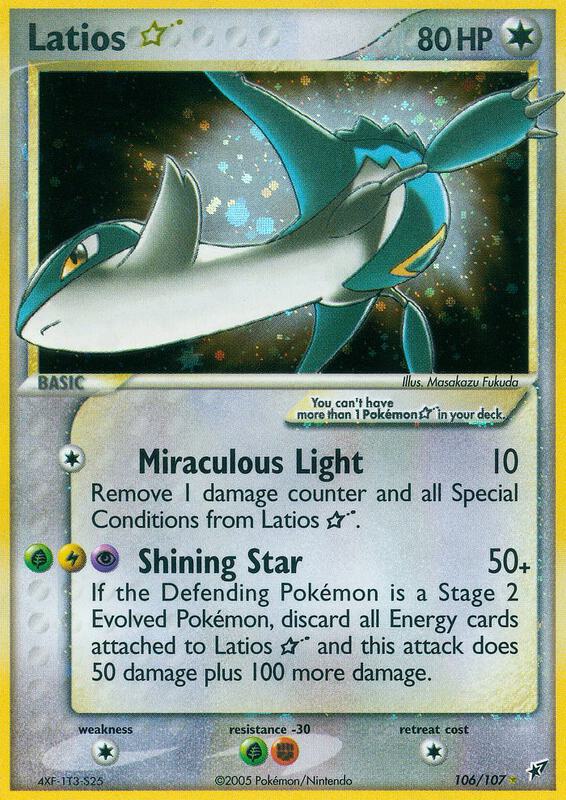
Latios Star
Deoxys · 106/107
Ultra RareMarket Price
$1,141
Low/High
$1,141 - $1,141
PSA 10
$51,100
30-Day Trend
—
7. Pikachu (1) (WoTC Promo)

Pikachu (1)
WoTC Promo · 01/53
PromoMarket Price
$27.64
Low/High
$25.76 - $38.00
PSA 10
$750.00
30-Day Trend
+0.0%
8. Pikachu Star (Holon Phantoms)
Pikachu Star
Holon Phantoms · 104/110
Ultra RareMarket Price
$3,200
Low/High
$3,200 - $3,200
PSA 10
$50,000
30-Day Trend
+0.0%
9. Lugia (Aquapolis)
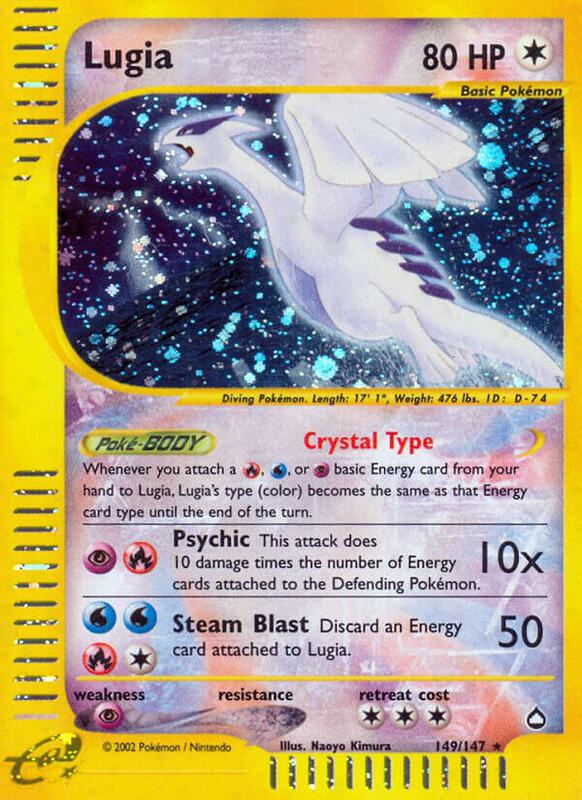
Lugia
Aquapolis · 149/147
Secret RareMarket Price
$2,500
Low/High
$2,500 - $2,500
PSA 10
$41,500
30-Day Trend
+0.0%
10. Charizard (Deck Exclusives)
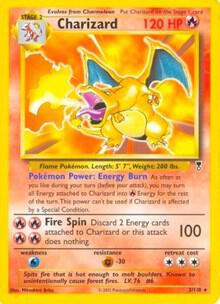
Charizard
Deck Exclusives · 003/110
RareMarket Price
$180.64
Low/High
$177.60 - $177.60
PSA 10
$3,800
30-Day Trend
+0.0%
The Pokemon Rarity Ladder, From Bulk to Chase
The Pokemon TCG rarity system has grown over 25+ years, and each rung up the ladder means fewer copies in circulation. Knowing where a card sits is the first step to spotting a real chase card:
Common (● Circle)
Printed in the highest volume, several per pack. Usually $0.05-$0.25, though vintage Base Set commons reach $1-$5 and 1st Edition commons can hit $10-$50+ purely on age-driven scarcity.
Uncommon (◆ Diamond)
Mid pull rate, mostly $0.10-$0.50. Exceptions are vintage uncommons with distinctive art or a 1st Edition stamp.
Rare (★ Star)
One per pack, covering both non-holo and holo. Non-holo rares run $0.25-$2. Holo rares are where scarcity starts to pay: modern holos $1-$10, vintage WOTC holos $10-$5,000+.
Ultra Rare (★★ and above)
Above standard rare: EX, GX, V, VMAX, VSTAR, and ex cards with Full Art or special art. Pull rates run 1-in-6 to 1-in-60+ packs, prices $2 to $200+.
Secret Rare
Numbered beyond the official set count (e.g. 201/198). Gold cards, Rainbow Rares, and other premium variants, the scarcest pulls in many sets. Prices $5 to $300+.
Special Art Rare / Illustration Rare
The modern chase tier. Born as Alt Arts in Sword & Shield and continued as SAR and SIR in Scarlet & Violet, these full-art showpieces are the rarest and most chased pulls in modern sets, $10 to $3,500+.
Use our price checker to look up any card, see its rarity tier, and gauge instantly whether it is scarce or bulk.
Lowest-Population Vintage Chase Cards with Prices
Vintage rares from the Wizards of the Coast era (1999-2003) sit at the top of most chase lists because so few survive clean. Here are the vintage cards collectors hunt hardest, with prices by grade:
Base Set (1999)
- Charizard Holo (#4): Raw: $80-$300 | PSA 10: $5,000+ | 1st Ed PSA 10: $300,000-$420,000
- Blastoise Holo (#2): Raw: $30-$80 | PSA 10: $3,000+ | 1st Ed PSA 10: $40,000-$60,000
- Venusaur Holo (#15): Raw: $20-$60 | PSA 10: $2,500+ | 1st Ed PSA 10: $25,000-$35,000
- Alakazam Holo (#1): Raw: $15-$40 | PSA 10: $1,500+
- Chansey Holo (#3): Raw: $10-$30 | PSA 10: $1,200+
Neo Genesis (2000)
- Lugia Holo (#9): Raw: $50-$150 | PSA 10: $3,000+ | 1st Ed PSA 10: $80,000-$130,000
- Typhlosion Holo (#17): Raw: $20-$50 | PSA 10: $1,500+
Skyridge & Aquapolis (2003)
- Skyridge Charizard Holo (#H3): Raw: $500-$2,000 | PSA 10: $15,000+
- Skyridge Celebi Holo (#H3): Raw: $100-$300 | PSA 10: $5,000+
- Aquapolis Lugia Holo (#H20): Raw: $200-$500 | PSA 10: $8,000+
Team Rocket (2000)
- Dark Charizard Holo (#4): Raw: $30-$80 | PSA 10: $2,000+ | 1st Ed PSA 10: $10,000+
- Dark Blastoise Holo (#3): Raw: $15-$40 | PSA 10: $1,000+
ex Era (2003-2007)
- Charizard Gold Star (Dragon Frontiers): Raw: $1,000-$5,000 | PSA 10: $30,000+
- Rayquaza Gold Star (Deoxys): Raw: $800-$2,000 | PSA 10: $20,000+
- Umbreon Gold Star (POP Series 5): Raw: $1,500-$4,000 | PSA 10: $25,000+
Scarcity gives vintage rares a floor in any condition: even a damaged Base Set Charizard fetches $30-$60. But condition is the real multiplier, because the gem population is tiny. The jump from PSA 8 to PSA 10 can be 5-10x.
Modern Chase Cards with Prices
Modern rares from 2020 onward use punishing pull rates to manufacture scarcity, and the best now rival vintage prices. Here are the modern chase cards worth money right now:
Sword & Shield Era (2020-2023)
- Umbreon VMAX Alt Art (Evolving Skies #215): Raw: $200-$350 | PSA 10: $3,500+
- Charizard VSTAR Rainbow (Brilliant Stars #174): Raw: $80-$150 | PSA 10: $400+
- Giratina VSTAR Alt Art (Lost Origin #131): Raw: $70-$120 | PSA 10: $300+
- Rayquaza VMAX Alt Art (Evolving Skies #218): Raw: $120-$250 | PSA 10: $800+
- Moonbreon / Espeon VMAX Alt Art (Evolving Skies #216): Raw: $50-$100 | PSA 10: $350+
- Gengar VMAX Alt Art (Fusion Strike #271): Raw: $80-$150 | PSA 10: $400+
- Charizard VMAX Rainbow (Champion's Path #74): Raw: $100-$250 | PSA 10: $600+
Scarlet & Violet Era (2023-present)
- Charizard ex SIR (Obsidian Flames #223): Raw: $80-$150 | PSA 10: $350+
- Charizard ex SAR (151 #199): Raw: $150-$300 | PSA 10: $600+
- Umbreon ex SAR (Shrouded Fable): Raw: $50-$120 | PSA 10: $250+
- Mew ex SAR (151 #205): Raw: $40-$80 | PSA 10: $200+
- Eevee SIR (151 #198): Raw: $30-$60 | PSA 10: $150+
Modern chases can appreciate hard as their print windows close: Evolving Skies cards have risen 2-3x since release. Watch which chase cards are gaining on our price checker.
Trophy and Promo Cards: The Scarcest of All
The rarest Pokemon cards never came in a booster pack. Promo and trophy cards were handed out at tournaments and events, so many exist in single-digit or low-double-digit counts, making them the ultimate scarcity chases:
Tournament and Trophy Cards
- Pikachu Illustrator: The most expensive card ever at $5.275 million, awarded to illustration contest winners in 1997-1998. Only about 39 copies are believed to exist, the scarcest mainstream chase of all.
- No. 1 Trainer (Super Secret Battle): Given to Japanese tournament winners. Sells for $100,000-$400,000 by grade, with only a handful in existence.
- Trophy Pikachu Gold / Silver / Bronze: Late-1990s prize cards. Gold versions, the scarcest tier, fetch $50,000-$150,000+.
- Kangaskhan Parent/Child Trophy: Awarded at a one-off 1998 Japanese event, $50,000-$150,000+.
Event Promo Cards
- Corocoro Mew Promo: A 1996 Japanese magazine promo, $200-$1,000 by condition and version.
- Ancient Mew (Movie Promo): Handed out at Pokemon 2000 screenings, common enough that sealed copies sit at $20-$50, open at $5-$15.
- Pokemon Center Promo Cards: Japanese Pokemon Center exclusives; scarce versions $50-$500+.
- Staff Prerelease Promos: Far scarcer than player versions; the staff stamp can add 5-10x.
Trophy and promo cards are in a scarcity class of their own. If you hold anything with an unusual stamp, logo, or event story, it may be worth far more than a regular card of the same era, so research the distribution before assuming it is ordinary.
Error Cards and Misprints: One-of-a-Kind Scarcity
Error cards and misprints are a niche but lucrative corner of the hobby, because a factory slip can create a card with a population of one. Collectors chase the dramatic ones hard:
Famous error cards:
- "No Damage Ninetales" (Base Set): A first-print error missing the damage value on the Ninetales Holo, $500-$5,000+ by condition.
- "No Symbol" Jungle/Fossil Cards: Early runs that omitted the set symbol; these scarcity errors sell for 2-5x corrected copies.
- "Red Cheeks Pikachu" (Base Set): A recognised first-print variant with red cheeks; 1st Edition copies reach $500-$1,000 in PSA 10.
- Miscut cards: Cut badly off-centre, revealing neighbouring cards. Dramatic miscuts run $50-$500+ by severity and base value.
- Crimped cards: Sealing or packaging crimps. Minor ones add a little; dramatic crimps on valuable cards reach $100-$1,000+.
- Wrong-back / dual-back cards: Printed with the wrong back, or two fronts/two backs. Extremely scarce, $500-$5,000+.
How to tell if your misprint is a chase card:
- The error must be a factory defect, not handling damage
- More dramatic errors are scarcer and worth more: a slight off-centre is nothing like a double-image miscut
- Errors on desirable base cards (Charizard, Pikachu) chase higher
- Authenticated errors (graded with the error noted) sell for more because the scarcity is verified
If you think you have an error, compare it carefully against known-correct copies. True factory errors are scarce and collectible, but ordinary wear is not an "error."
Japanese Exclusive Rare Cards
The Japanese market has its own world of exclusive rare cards that never got English prints, and many are heavily chased by global collectors precisely because of their scarcity abroad:
Japanese-only sets and promos:
- Masaki Promo Set (1996): Five evolution promos (Gengar, Alakazam, Golem, Machamp, Omastar) from a mail-in campaign. Complete sets $500-$2,000+, singles $100-$500.
- Tamamushi University Magikarp: A 1998 quiz-tournament prize, extraordinarily scarce, $10,000-$50,000+.
- Pokemon Web Series: A 2001 Japan-only set with unique designs; complete holos $30-$200 each.
- Japanese Promo Cards: Dozens of exclusives a year via magazines, stores, and events. Standout promos like the Munch "Scream" collaboration (Pikachu, Eevee, Psyduck) reach $100-$500+.
Why Japanese cards run scarcer and pricier:
- Earlier print dates: Japanese cards print before English, making them the global "first edition"
- Exclusive artwork: Some carry art never used on English cards
- Higher print quality: Better printing and card stock
- Lower PSA populations: Fewer are graded, so high grades are scarcer and chased harder
Do not write off Japanese cards. Early-set holos (Base Set, Jungle, Fossil) sell for $5-$50+ each, and scarce promos run into the hundreds or thousands. Check our price checker for Japanese values.
How Condition Decides a Rare Card's Scarcity Tier
For rare cards, condition is the ultimate scarcity multiplier. Two identical cards can differ in price 100x, because only the cleanest copies join the scarce top-grade population collectors chase. Here is how each grade moves value:
PSA 10 (Gem Mint): The chase grade. A $20 raw rare can become $100-$200; a Base Set Charizard jumps from $80-$300 raw to $5,000+. Few copies ever qualify, which is the whole point.
PSA 9 (Mint): One minor flaw allowed, typically 30-60% of PSA 10. The sweet spot for collectors who want a graded chase card without gem pricing.
PSA 8 (Near Mint-Mint): Light wear under inspection, usually 15-25% of PSA 10. Good on scarce vintage where gems are nearly unobtainable.
PSA 7 (Near Mint): Visible edge/corner wear, 10-15% of PSA 10. Still collectible, much cheaper.
PSA 5-6 (Excellent to Light Play): Noticeable wear, 3-10% of PSA 10. For chasers who want the card without the premium.
PSA 1-4 (Poor to Good): Heavy wear or creases, 1-5% of PSA 10. Even here scarcity holds a floor: a PSA 1 Base Set Charizard still sells for $50-$100.
Preserving your rare cards' condition (and scarcity):
- Use penny sleeves + top-loaders immediately
- Store cool and dry: humidity warps cards and peels foil
- Avoid rubber bands or binder rings that dent or bend
- Handle by the edges only: surface fingerprints cut grades
- Consider grading for cards worth $50+ to lock in the condition and its scarcity tier
How to Evaluate and Sell a Rare Card
Found a card you think is a chase? Here is how to evaluate and sell rare Pokemon cards for the best return:
Step 1: Identify the card precisely
Record the name, set symbol, card number, and rarity symbol, e.g. "Charizard, Base Set, #4/102, Holo Rare." Exact details let you find exact pricing and confirm the variant.
Step 2: Assess condition honestly
Check surface scratches, edge whitening, corner wear, and centering under bright light. Overestimating leads to disappointment; if it looks pristine it may be a PSA 9-10, the scarce tier worth chasing.
Step 3: Check current market value
Use our free price checker for raw and graded prices, then cross-reference TCGPlayer market and eBay sold listings, never active asking prices, which are inflated.
Step 4: Decide whether to grade
If it is $50+ raw and Near Mint or better, grading by PSA or BGS can lift value sharply. A raw $100 card that grades PSA 10 could become a $500+ scarce-population card.
Step 5: Choose your selling platform
- eBay: Biggest audience, auction or Buy It Now. Best for high-value and graded chases. Fees ~13%.
- TCGPlayer: Dedicated card market, good for ungraded. Fees ~11-13%.
- Facebook Groups: Lower fees, needs trust. Good for mid-range.
- Local card shops: Instant cash, usually 40-60% of value.
- Card shows and conventions: Good for bulk and meeting serious chasers.
Step 6: List strategically
Shoot sharp photos of front, back, and any notable features. Price against the five most recent sold listings for the same card and condition, and time listings for holidays or hype cycles.
For scarce cards worth $500+, consider a reputable Pokemon auction house. They take 10-15% but reach the serious chasers who pay top dollar. Tools like Poketrace help you track prices and time the sale.